

Home > Conditions > Sore Throat
Sore Throat Treatment in Singapore
How Common is Sore Throat in Singapore?
In Singapore, sore throat is a common reason for visiting primary care, often as part of an upper respiratory tract infection (URTI). Local primary care data show that although only a small proportion of total clinic visits meet stricter “sore throat” criteria, these cases still form a recurring workload in day-to-day practice. In one large Singapore general practice dataset (over 722,000 visits), 0.8% of visits met criteria for sore throat, and 66.1% of sore throat visits resulted in an antibiotic prescription, highlighting both how frequently sore throat presents and how commonly it is managed in clinics.
What is a Sore Throat and Why Does it Happen?
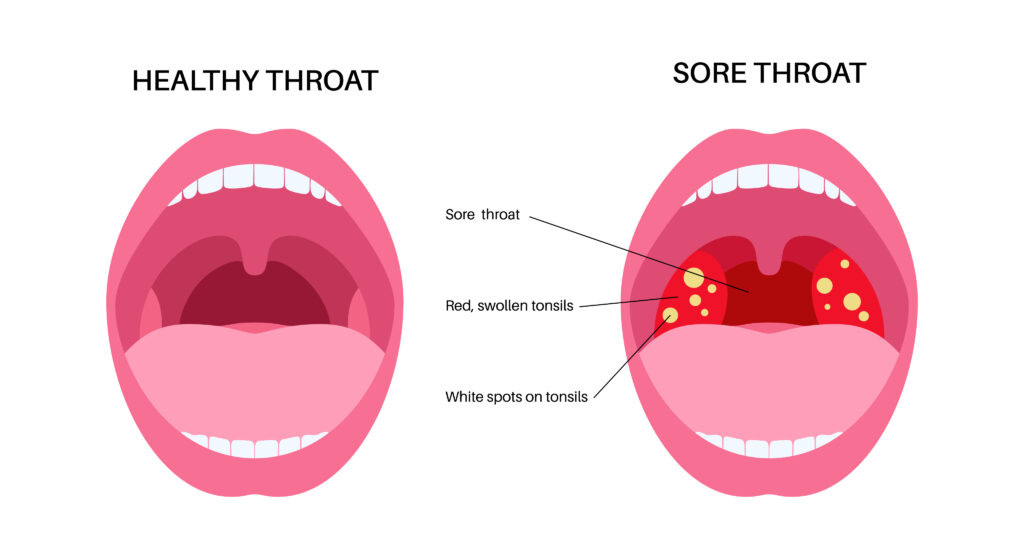
A sore throat or pharyngitis refers to pain, scratchiness, or irritation in the throat. It may feel worse when swallowing and can make simple daily activities like eating, drinking, and speaking uncomfortable. In many cases, sore throat symptoms are linked to viral upper respiratory tract infections, such as the common cold or influenza. Less commonly, it may be caused by bacterial infections. For example, group A streptococcal infection (sometimes referred to as “strep throat”) or non-infectious triggers such as allergies, exposure to smoke/dust, dry air, or acid reflux.
Most sore throats from viral infections improve on their own within about a week, while bacterial causes may require medical assessment and may be treated with antibiotics when appropriate.
Who Is More Likely to Get Sore Throat Infections?
Certain groups are more prone to throat inflammation and recurrent infections, including:
- Children and teachers: Frequent viral exposure in schools increases infection risk.
- People who snore or breathe through the mouth: Mouth breathing dries the throat lining.
- Smokers and those exposed to second-hand smoke: Tobacco irritates and inflames throat tissues.
- Individuals with allergies or acid reflux: Post-nasal drip or reflux can cause chronic throat irritation.
These factors contribute to throat inflammation and recurring throat pain, which may require assessment by a sore throat doctor or throat specialist in Singapore for proper diagnosis and care.
What Are the Common Symptoms of a Sore Throat?
Throat Pain or Irritation
A dry, scratchy feeling, burning sensation, or sharp pain in the throat that may worsen when swallowing or speaking.
Redness or Swelling in the Throat
Inflamed tissues at the back of the throat or tonsils may appear red or slightly swollen on visual inspection.
Difficulty Swallowing
Discomfort or pain when swallowing, known as odynophagia, is common with throat infections or inflammation.
Hoarse or Muffled Voice
Vocal strain or swelling near the vocal cords can affect tone and clarity.
Swollen Lymph Nodes in the Neck
Tender lymph nodes may accompany infection or inflammation as the immune system responds.
Mild Fever or Cough
A low-grade fever or cough may develop with viral sore throats and typically improves as recovery occurs.
What Causes Sore Throat?
Infectious Causes
Viral Infections
Viruses such as influenza, the common cold, or COVID-19 are frequent causes. These infections usually resolve with rest, fluids, and symptom management.
Bacterial Infections
Streptococcus bacteria may cause strep throat, which often requires antibiotics prescribed after a medical evaluation.
Non-Infectious Causes
Allergies or Post-Nasal Drip
Allergens like dust, pollen, or pet dander can lead to throat irritation through post-nasal mucus drainage.
Acid Reflux (Laryngopharyngeal Reflux)
When stomach acid travels upwards, it can irritate the throat lining and cause persistent soreness.
Dry Indoor Air or Mouth Breathing
Air-conditioning and mouth breathing reduce throat moisture, leading to dryness and discomfort.
Smoking or Irritant Exposure
Tobacco smoke, pollution, or workplace chemicals can inflame the throat and airways.
Voice Overuse
Extended speaking, shouting, or singing can strain the vocal cords, resulting in temporary discomfort or hoarseness.
How is Sore Throat Diagnosed in Singapore?
Diagnosing a sore throat usually starts with a clinical assessment to understand the likely cause (viral, bacterial, or non-infectious). In Singapore, this is typically done at a GP clinic, polyclinic, or ENT clinic, depending on symptom severity and duration.
1. Medical History & Symptom Review
Your sore throat doctor will ask questions such as:
- When the sore throat started, and whether it is improving or worsening
- Whether there is fever, cough, runny nose, or body aches
- Any exposure to sick contacts (e.g., household members, school, workplace)
- Any history of acid reflux, allergies, smoking/vaping, or frequent throat irritation
- Whether symptoms keep recurring or last longer than expected
These details help determine whether the sore throat is more likely due to a viral infection, a possible bacterial infection, or irritation from non-infectious causes.
2. Physical Examination
A throat specialist will examine:
- Throat and tonsils (for redness, swelling, inflammation, or discharge)
- Neck lymph nodes (for tenderness or swelling)
- Nose and ears (as infections can involve nearby areas)
- Signs of dehydration or breathing strain, when relevant
Important note: White patches or tonsil coating may occur in both viral and bacterial infections, so the appearance alone is not always enough to confirm the cause.
3. Swab Tests (When Needed)
Swab testing is not always required, but may be recommended if symptoms suggest a higher likelihood of infection or if confirmation is necessary.
Depending on the clinical context, tests may include:
- Throat swab: to check for bacterial causes such as strep throat
- COVID-19 / influenza testing: if symptoms match circulating respiratory infections
- Other tests when clinically indicated (e.g., based on outbreak risk, close-contact exposure, or symptom severity)
4. Additional Investigations (Selected Cases)
If symptoms are persistent, recurrent, or unusual, further evaluation may be needed. This can include:
- Blood tests (to assess infection/inflammation where appropriate)
- ENT assessment (especially for prolonged symptoms, recurrent tonsillitis, or suspected complications)
- Flexible nasendoscopy (a scope examination) in selected cases, particularly when symptoms are ongoing or associated with voice changes, swallowing concerns, or throat masses

What Complications Can Happen If a Sore Throat Persists?

Recurring or Chronic Sore Throat
Untreated infections or ongoing irritation can cause repeated inflammation, leading to discomfort over time.

Spread of Infection to the Tonsils (Tonsillitis)
Persistent sore throat infection may extend to the tonsils, resulting in throat swelling, pain, and sometimes fever.

Breathing or Swallowing Difficulties (Rare)
Severe or neglected inflammation may cause temporary swelling that affects normal swallowing or breathing.

Voice Changes Due to Persistent Irritation
Ongoing strain or infection can cause hoarseness, vocal fatigue, or mild voice changes that require ENT assessment.
If symptoms are persistent, a throat specialist in Singapore can evaluate whether further treatment is needed to prevent complications like tonsillitis.
What are the Treatment Options for a Sore Throat in Singapore
Treatment for throat-related symptoms varies based on the underlying cause. At an ENT throat clinic, the focus is on addressing both the symptoms and potential contributing factors. Depending on the findings from your consultation, your doctor may recommend one or more of the following:
Pain Relief
Paracetamol or non-prescription lozenges may be advised to help reduce discomfort while the throat heals.
Gargles or Throat Sprays
Saltwater gargles or throat sprays may help soothe irritation and keep the throat moist.
Antihistamines
If allergies are contributing to symptoms, antihistamines may help relieve throat irritation and nasal congestion.
Acid Reflux Medication
For symptoms linked to reflux, medications to reduce stomach acid may be prescribed. This may help prevent further throat irritation.
Voice Therapy Referral
In cases of hoarseness or vocal strain, voice therapy may be suggested. This may be arranged with a speech-language therapist.
Supportive Measures
Staying well-hydrated, resting the voice, and using a humidifier at home may help alleviate symptoms and support recovery.
These treatment options are discussed during your visit, depending on the nature of your symptoms and examination findings.
FAQs About ENT Throat
When should persistent throat discomfort be assessed by a doctor, and how do symptoms influence the need for throat surgery?
Throat discomfort that persists for several weeks, recurs frequently, or is associated with symptoms such as difficulty swallowing or voice changes may require assessment. The aim of evaluation is to identify the underlying cause, which is often non-surgical. Throat surgery is considered only after careful review of findings and when other management options are not suitable.
Can throat-related symptoms such as snoring or disrupted sleep indicate a need for obstructive sleep apnea treatment?
In some cases, throat-related factors can contribute to snoring or disturbed sleep. Assessment focuses on airway structure, breathing patterns during sleep, and associated symptoms. Obstructive sleep apnea treatment is considered only when clinical evaluation suggests repeated airway obstruction affecting sleep quality.
How are throat issues linked to ENT snoring, and when should this be evaluated further?
Snoring can occur when throat tissues vibrate or narrow during sleep. Occasional snoring is common, but ongoing or loud snoring may warrant assessment, particularly if it is associated with poor sleep or daytime fatigue. ENT evaluation for snoring looks at possible contributors within the nose and throat before determining next steps.
When should parents seek assessment for ongoing throat symptoms in children?
Parents may consider assessment from a pediatric ENT in Singapore if their children have frequent sore throats, persistent hoarseness, or noisy breathing. Children’s symptoms and examination findings can differ from adults, so reviews are adapted to age and comfort, with management guided by clinical assessment.
What factors help determine whether a sore throat is related to infection, reflux, voice strain, or airway-related conditions?
Evaluation considers symptom duration, associated features such as fever or reflux symptoms, voice use, and examination findings. These factors help differentiate between infection, irritation, voice-related causes, or airway issues. Management is based on the identified cause and individual clinical context.
Sore Throat Specialist in Singapore
If a sore throat persists beyond 1 week, pain when swallowing, or the feeling of a lump in the throat, it may be helpful to consult an ENT specialist for an evaluation. Dr Leslie Koh sees patients at Mount Alvernia Hospital.