

When Breathing Aids Are Not Enough: Recognising the Limits of Over-the-Counter Snoring Solutions
Home | When Breathing Aids Are Not Enough: Recognising the Limits of Over-the-Counter Snoring Solutions

Medically Reviewed By:
Dr Leslie Koh
M.B;B.S. (Singapore), MRCS (ENT) Edinburgh, M. Med (ORL), FAMS
Introduction
Over-the-counter (OTC) anti-snoring devices are often the first option people turn to when looking for relief from disrupted sleep. Products such as nasal strips, dilators, and mouthpieces are widely available and are commonly regarded as solutions for excessive snoring. In cases where snoring is associated with mild nasal congestion, these aids may offer some short-term relief.
However, snoring varies in cause and severity. When it becomes loud, persistent, or begins to affect energy levels during the day, it may signal an underlying issue that basic breathing aids cannot resolve. Structural differences in the airway or sleep-related breathing disturbances often require further assessment.
This article outlines the limits of anti-snoring devices, highlights signs that suggest a more complex problem, and explains when a professional evaluation may be necessary to understand what’s behind the snoring.
Key Takeaways
Not all snoring is harmless:
Occasional snoring may not be a concern, but persistent or loud snoring could signal deeper health or airway-related issues that deserve attention.
Quick fixes have their limits:
Anti-snoring devices like breathing aids purchased off the shelf may offer short-term relief, but they often do not address the underlying structural or sleep-related causes of ongoing symptoms.
Self-treatment can delay proper care:
Relying solely on retail solutions without a medical review may result in missed diagnoses, especially for conditions that affect long-term health.
Specialist evaluation brings clarity:
A consultation with a medical professional can help identify the root cause of snoring and guide more effective, tailored treatment options.
Understanding OTC Snoring Aids and Their Limits
OTC anti-snoring devices are a popular first step for those seeking relief, but their effectiveness can vary. This section looks at why these aids are widely used, how they are designed to function, and where they may fall short, particularly when snoring is associated with structural or sleep-related issues. It also outlines signs that may indicate the need for further evaluation beyond self-treatment.

Why Are OTC Snoring Aids So Popular?
Anti-snoring devices are often the first solution people reach for when trying to manage snoring on their own. Readily available in pharmacies and online, they require no prescription and tend to be more affordable than medical consultations. Their appeal often lies in the promise of quick and accessible relief without the perceived inconvenience of visiting a doctor.
Products like nasal strips, internal dilators, and boil-and-bite mouthpieces are marketed as simple tools for managing occasional or mild snoring. Advertising often presents anti-snoring devices as one-size-fits-all solutions, downplaying the complexity behind why snoring occurs. This can lead to the belief that the issue is minor and can be easily managed without further evaluation.
It’s understandable why so many people take this route. Making time for a medical appointment, undergoing tests, or considering treatment options can seem overwhelming. For this reason, anti-snoring devices remain a popular choice for those seeking a quick fix, even when the underlying cause may require more targeted support. Many people continue with self-treatment before eventually consulting a snoring specialist in Singapore, particularly when symptoms start to persist or worsen.
How Breathing Aids Work and Where They Fall Short
Different types of anti-snoring devices are designed to support airflow by targeting specific areas of the airway. Nasal strips and dilators, for instance, aim to widen the nostrils to improve airflow through the nose. These can be helpful when snoring is related to mild nasal congestion or narrow nasal passages.
Mandibular advancement devices work by gently shifting the lower jaw forward. This helps prevent the tongue from falling back during sleep, which can partially block the airway. Other aids, like tongue stabilising devices and chin straps, aim to maintain a more open position of the jaw or tongue to support breathing throughout the night.
While anti-snoring devices may alleviate symptoms for some individuals, they are generally limited to cases where snoring is caused by surface-level or positional issues. They are not intended to address snoring that results from deeper airway collapse or structural concerns within the throat.
Conditions such as soft tissue vibration, reduced muscle tone during sleep, enlarged tonsils, or anatomical differences, such as a deviated septum, typically fall outside the scope of what these devices can manage. In such cases, individuals may require further evaluation and may benefit from targeted treatment of a deviated nasal septum based on clinical findings.
Anti-snoring devices are also unlikely to be effective when snoring is associated with sleep apnea. While they may offer temporary symptom relief, they do not address the underlying cause of interrupted breathing during sleep. This can lead to a false sense of improvement while more serious health risks remain unrecognised.
Signs That Your Snoring May Be More Than a Surface Issue
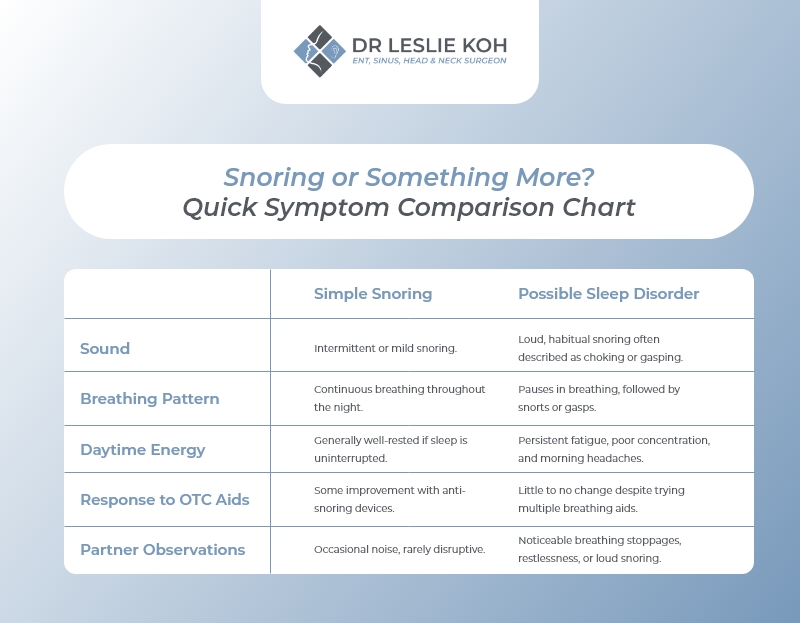
Not all snoring carries the same implications. While some people may snore occasionally with little impact, loud, frequent, or disruptive snoring can indicate a more serious underlying health issue. If you’ve tried multiple anti-snoring devices with little or no improvement, it may be time to look more closely at what’s happening during sleep.
Snoring that continues despite the use of breathing aids could be caused by an obstruction deeper in the airway. This is particularly concerning if you wake up gasping, choking, or with a racing heart. These episodes may suggest that the airway is narrowing or collapsing during sleep, even if you’re not fully aware of it.
Daytime symptoms can also provide insight. Constant fatigue, irritability, difficulty concentrating, or waking up with a dry mouth may all point to disrupted sleep. Morning headaches and frequent nighttime urination are also commonly reported signs that sleep quality is being affected.
Observations from your partner can also be helpful. Pauses in breathing, loud snorts, or restless movements may indicate a pattern worth investigating. In such cases, a sleep apnea test can help determine whether your breathing is being interrupted during the night, even if you are not aware of it yourself.
The Hidden Risks of Relying Solely on OTC Snoring Solutions
While OTC anti-snoring devices may provide short-term relief, they can sometimes give a false sense of reassurance. Relying on self-treatment alone may delay the recognition of more serious sleep-related conditions, such as obstructive sleep apnea, which can carry long-term health risks if left untreated. This section examines why persistent snoring should not be overlooked and highlights situations where professional ENT or sleep evaluation may be necessary for a more accurate diagnosis and treatment.
The Risk of Masking More Serious Sleep Disorders
It’s easy to assume that if snoring becomes quieter, the problem is under control. However, using OTC anti-snoring devices without understanding the underlying cause can be misleading. These products may reduce the noise, giving the impression that sleep has improved, even when more serious issues are still present.
One such concern is obstructive sleep apnea, a condition in which breathing repeatedly stops and starts during sleep due to airway blockage. These interruptions can fragment sleep and place ongoing strain on the heart, brain, and other systems. Over time, untreated sleep apnea has been associated with increased risks of cardiovascular disease, cognitive difficulties, and metabolic problems. In many cases, proper management involves obstructive sleep apnea treatment, which goes well beyond what OTC breathing aids are designed to provide.
Because anti-snoring devices typically address surface-level symptoms, they may not alert users to the fact that their breathing is being disrupted during the night. This can lead to delayed diagnosis and missed opportunities for early intervention. Persistent or severe snoring should not be dismissed as a harmless habit. It may be a sign that the body is not getting the quality of sleep it needs to recover and function properly.

When to Consider a Professional ENT or Sleep Evaluation
If you’ve been using anti-snoring devices consistently and the problem continues, it may be time to consider a professional evaluation. Persistent snoring, particularly when accompanied by symptoms such as daytime fatigue, gasping during sleep, or difficulty concentrating, often requires customised care plans.
An ENT specialist can perform a detailed assessment of the upper airway, including the nasal passages, throat, and soft tissue structures, to identify any anatomical contributors to snoring. This can be especially relevant if issues like a deviated septum are suspected. In more complex cases, a nasal specialist may be able to uncover airflow restrictions that are not easily addressed with self-treatment.
Depending on your symptoms, a doctor may refer you for further evaluation to understand how your breathing behaves during sleep. This can help determine whether your snoring is related to a sleep-related breathing disorder, such as obstructive sleep apnea, and how severe it might be.
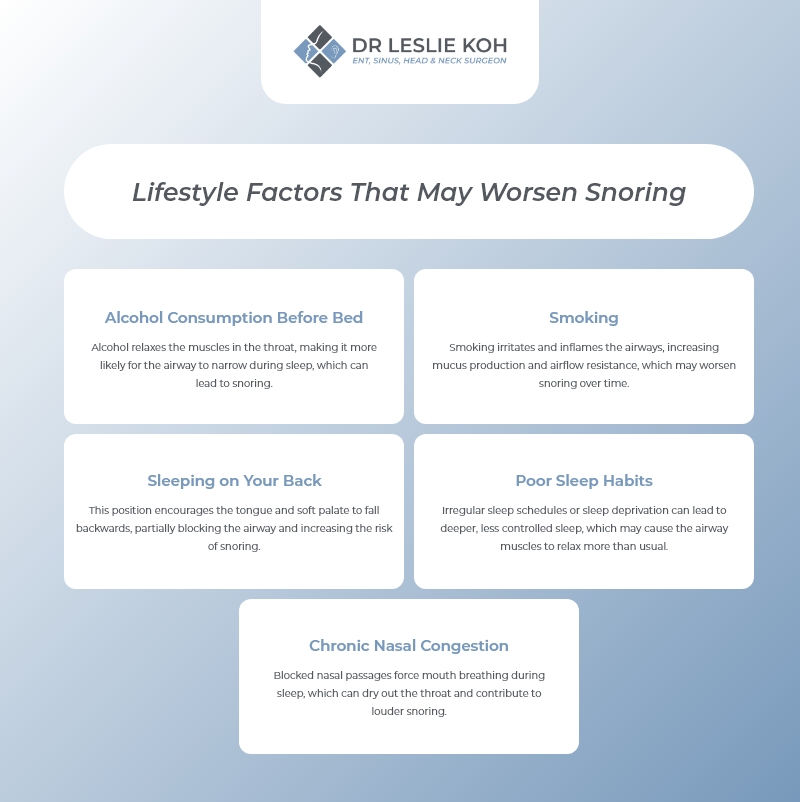
Certain risk factors increase the importance of seeking medical advice. These include a family history of sleep apnea, smoking, alcohol use, obesity, or a larger neck circumference. However, even in the absence of these factors, long-term snoring that doesn’t respond to anti-snoring devices should not be overlooked.
A professional evaluation provides a clearer understanding of the underlying cause, allowing for more targeted treatment. Based on the findings, your doctor may recommend lifestyle adjustments, oral appliances, positive airway pressure therapy, or procedures to address structural issues, approaches that go beyond simply managing the sound of snoring.
Questions You Might Have
1. Is it harmful to keep using OTC breathing aids if they seem to help?
If you’re using them occasionally for mild nasal congestion, there’s generally no harm. However, if snoring continues despite regular use of anti-snoring devices, it may be masking a more serious underlying issue. Without investigating the underlying cause, there’s a risk of missing health problems that require proper attention over time.
2. If I don't feel tired during the day, could I still have a problem?
Yes, that’s possible. Some people with disrupted breathing during sleep don’t feel noticeably tired during the day. Even without apparent symptoms, sleep quality may still be affected. Relying on anti-snoring devices alone may not reveal whether deeper issues, such as disturbed oxygen flow or fragmented sleep, are taking a toll on your overall health.
3. What assessments can an ENT doctor provide that OTC solutions cannot?
An ENT doctor can assess the nose, throat, and airway to identify structural causes of snoring, something anti-snoring devices cannot do. This may involve physical examination, imaging, or nasoendoscopy to pinpoint any blockages or abnormalities that require a more specific form of management.

Conclusion
OTC anti-snoring devices may offer short-term relief for mild or occasional snoring. However, when snoring becomes frequent, disruptive, or starts to affect daily functioning, it may be a sign of an underlying issue that simple breathing aids cannot resolve. Relying solely on these devices without identifying the root cause can delay diagnosis and allow conditions such as obstructive sleep apnea to go unnoticed.
A professional assessment can help identify structural factors within the nose or throat and determine whether further investigation is needed. This allows for a clearer understanding of what’s contributing to the snoring and supports more informed, condition-appropriate management.
Dr Leslie Koh, an ENT specialist at Mount Alvernia, offers thorough evaluations for snoring and upper airway concerns. His services include examination of the nasal passages, throat, and related structures to assess potential causes of sleep-related breathing issues.
If snoring has become a regular concern, book a consultation with Dr Leslie Koh to understand your symptoms and explore appropriate next steps for improved sleep and breathing.