

Night-Time Nasal Congestion — What It Reveals About Your Health
Home | Night-Time Nasal Congestion — What It Reveals About Your Health

Medically Reviewed By:
Dr Leslie Koh
M.B;B.S. (Singapore), MRCS (ENT) Edinburgh, M. Med (ORL), FAMS
Introduction
Waking up tired, congested, or with a dry mouth could point to more than just poor sleep. In some cases, the underlying issue may be nasal congestion at night, a concern that many people overlook or accept as part of daily life.
Although often perceived as a minor inconvenience, blocked nasal passages can significantly impact the body’s ability to rest and recover. The nose plays a central role in breathing while you sleep. When airflow is reduced, even slightly, the body may shift to mouth breathing without conscious awareness.
This change can affect how air moves through the body, lower oxygen levels, and disrupt the quality of sleep. Over time, the effects may manifest as daytime tiredness, poor concentration, or a low mood. These symptoms are often mistaken for stress or general fatigue.
This article explores how nasal congestion at night may influence your sleep and overall wellbeing. Understanding what to look out for is a helpful first step in identifying whether your night-time breathing patterns are affecting how you feel each day.
Key Takeaways
- Breathing through the nose during sleep is crucial for optimal oxygen intake and a more restful sleep. When airflow is disrupted, it can quietly affect your energy, focus, and overall wellbeing.
- Many people experience poor-quality sleep without realising that nasal blockage is part of the issue. Signs such as dry mouth, frequent waking, or morning grogginess may indicate breathing disturbances.
- Factors such as sleeping posture, room environment, and structural nasal differences can all influence how easily air flows through your nose at night.
- Paying closer attention to your sleep patterns and morning symptoms can help you recognise when it’s time to seek support. Early awareness is key to improving both night-time rest and daytime function.
Understanding the Impact of Night-time Nasal Congestion
Nasal congestion at night does more than cause discomfort. It can alter how you breathe during sleep and quietly disrupt how well your body rests and recovers. This section explores the role of nasal breathing in supporting sleep, why some people shift to mouth breathing without realising it, and what signs may suggest your airflow is being disrupted. Recognising these patterns can help you understand whether night-time congestion is affecting your daily wellbeing.

How Your Nose Affects the Way You Sleep
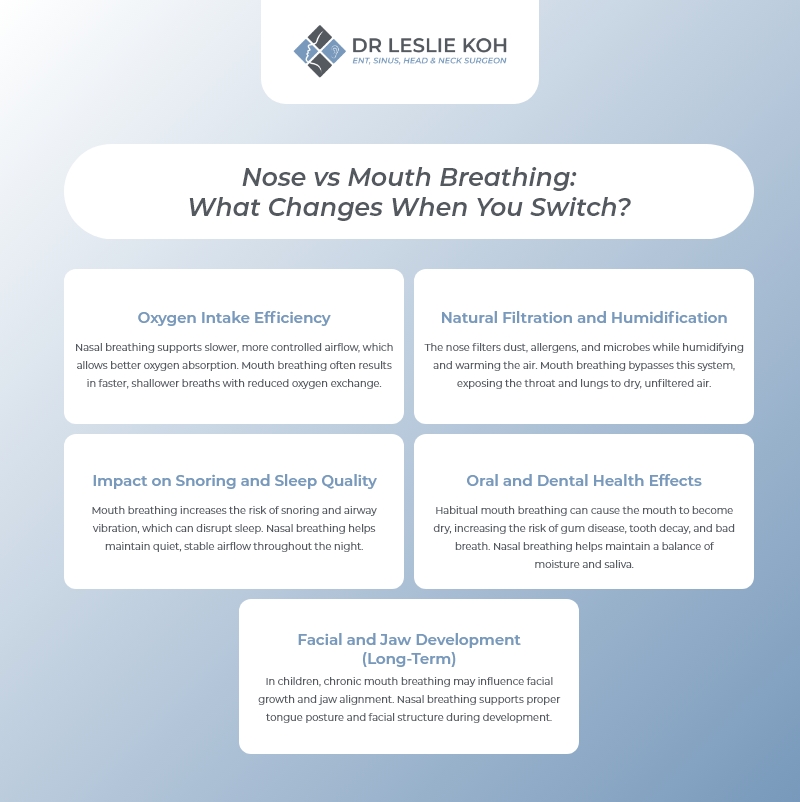
The nose does more than allow air to move in and out. During sleep, it serves as the body’s main breathing route, filtering out dust and allergens, humidifying the air, and regulating airflow to support uninterrupted rest. When nasal passages are clear, breathing remains steady and quiet, helping the body enter deeper sleep cycles that are essential for recovery and overall health.
However, when nasal passages are partially or fully blocked, even briefly, breathing becomes less efficient. The body may automatically switch to mouth breathing, often without you realising it. While this may seem like a minor adjustment, it can disrupt airflow and reduce oxygen intake. As a result, sleep may become lighter and more fragmented.
Nasal congestion at night can gradually affect the quality of rest, reducing the time spent in restorative sleep stages. This may impact how well the body repairs itself, your mental sharpness, and the amount of energy you have during the day. Over time, nasal congestion at night may quietly undermine how rested you feel, even after what seems like a whole night’s sleep.
Why Some People Breathe Through Their Mouth Without Realising
Many people breathe through their mouths during sleep without realising it. One of the most common reasons for this shift is nasal congestion at night. When airflow through the nose becomes restricted, the body instinctively switches to mouth breathing. This change rarely causes full awakenings, so it often goes unnoticed. Instead, it may leave behind subtle signs such as a dry mouth, sore throat, or a general sense of unrest after sleep.
Nasal airflow can be restricted by structural factors like a deviated septum or by inflammation caused by allergens, irritants, or dry air. In some cases, individuals may consider deviated nasal septum treatment to help restore more stable nasal breathing and reduce the need to compensate through the mouth.
Over time, these symptoms can become familiar and may be mistaken as normal. What begins as an occasional response to congestion can gradually turn into a nightly pattern. This may contribute to fragmented sleep, reduced sleep quality, and lower energy levels during the day. If nasal congestion persists at night, it is worth observing whether it may be affecting your breathing and overall rest.
Common Signs That Night-Time Nasal Breathing May Be Affected
Disrupted nasal airflow during sleep is not always obvious. You may fall asleep easily and stay asleep through the night, yet still wake up feeling far from rested. Some of the more common signs that your night-time breathing may be affected include:
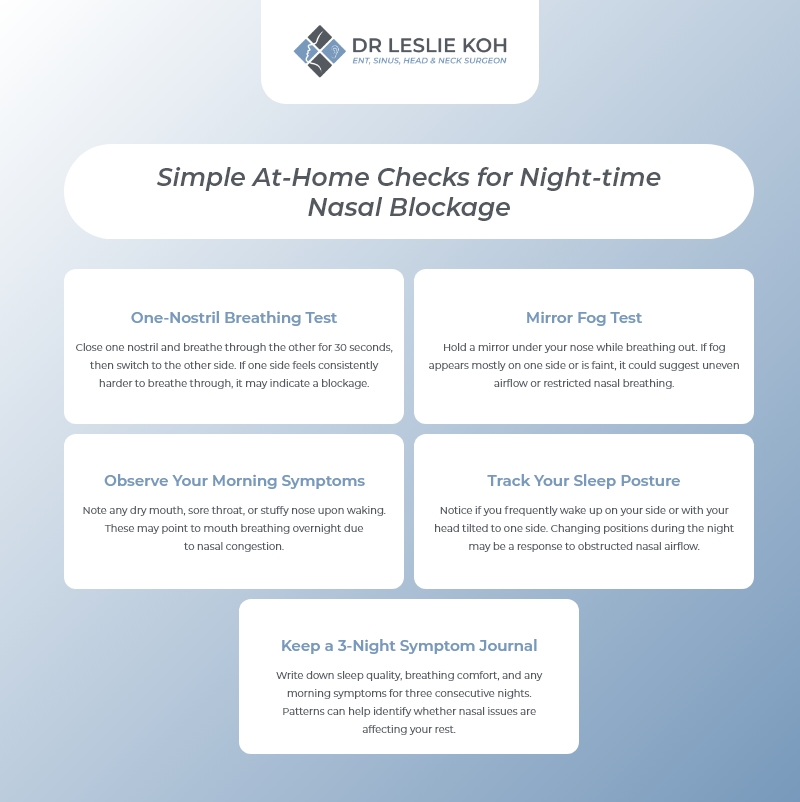
- Dry mouth or sore throat in the morning, which may suggest that air is bypassing the nose and entering through the mouth.
- Waking up groggy or unrefreshed, even after a full night of rest, may indicate shallow or fragmented sleep.
- Frequent changes in sleeping position or waking up several times without an apparent reason, possibly due to subtle interruptions in breathing.
- Congestion that worsens when lying down which may be related to changes in blood flow or inflammation in the nasal passages.
- Snoring or noisy breathing, which may become more noticeable when nasal airflow is reduced. In some cases, individuals may consider snoring treatment in Singapore to address persistent symptoms.
These patterns can provide early clues that your nasal passages are not functioning properly during sleep. If you experience nasal congestion at night along with these signs, it may be worth exploring the underlying cause to help support healthier breathing and more restful sleep.
Health and Daytime Effects of Night-time Nasal Congestion
Blocked nasal airflow during sleep can affect how you feel the next day. Fatigue, poor focus, and low mood are often associated with inadequate rest. These symptoms are frequently easily dismissed as stress or routine tiredness, but nasal congestion at night may be a contributing factor. Recognising the link can help you understand what’s affecting your daily energy and clarity.
What It Means for Focus, Energy, and Mood
Nasal breathing plays a crucial role in maintaining oxygen levels during sleep, which supports the brain and body as they undergo overnight repair. When airflow is restricted, oxygen delivery may be reduced, which can have a subtle impact on how you feel the next day. Nasal congestion at night can make it harder to focus, lower your energy levels, and affect how you respond to stress.
Shallow or fragmented sleep caused by poor airflow may lead to symptoms such as mental fog, irritability, and reduced concentration. These changes often develop slowly, making them easy to attribute to work pressure, lack of rest, or general fatigue. Over time, even minor disruptions can start to affect daily functioning and mood.
For some individuals, nasal congestion at night is linked to triggers like allergens or environmental irritants. If symptoms persist, it may indicate a condition such as allergic rhinitis, which can worsen if left untreated. Recognising the cause can help guide more effective ways to improve both sleep and daytime wellbeing.

When Occasional Congestion Becomes Frequent
Most people experience a blocked nose from time to time, usually during a cold or after exposure to allergens. However, when nasal congestion at night becomes a regular occurrence, it may indicate an ongoing issue that requires closer attention.
If congestion occurs most nights or worsens in certain environments, like in air-conditioned rooms or dusty areas, it may be linked to triggers like allergic reactions, dry air, or chronic inflammation. In some cases, underlying structural problems may be involved. A long-term solution, such as septoplasty, may be considered to improve airflow and support a more restful sleep.
Small changes in your sleep patterns can reveal more than expected. Needing to shift positions often, waking up with a dry mouth, or feeling unrefreshed in the morning may all point to compromised breathing. These signs are usually easy to miss or downplay, especially when symptoms vary.
Keeping a sleep journal or using tracking apps can help you identify consistent patterns over time. These tools may reveal frequent awakenings, changes in sleep depth, or signs of disrupted rest. Noticing these trends can be the first step in understanding whether nasal congestion at night is interfering with how well your body rests and recovers.
Questions You Might Have
1. Why does my nose block only at night?
Nasal congestion at night is a common issue and often becomes more noticeable when lying down. This is partly due to increased blood flow to the nasal passages, which can cause the tissues inside the nose to swell slightly. If there is existing inflammation, irritation, or narrowing, the effect may be more pronounced. Gravity also makes it harder for mucus to drain when you’re in a horizontal position.
2. How can I tell if nasal congestion is disturbing my sleep?
The signs of disrupted breathing can be subtle. Waking up with a dry mouth or sore throat, feeling tired despite a full night’s rest, or needing extra time to feel alert in the morning may all point to nasal congestion at night. Even if you stay asleep, your rest may be lighter or interrupted without you realising it.
3. Can nasal blockage cause snoring or breathing pauses?
Yes. When the nasal passages are narrowed or blocked, airflow becomes restricted. This often leads to mouth breathing, which can increase the likelihood of snoring. In some cases, nasal congestion at night may contribute to brief breathing pauses, particularly when combined with other factors such as relaxed throat muscles or underlying airway issues.
4. When should I see an ENT specialist?
If congestion happens most nights and is affecting your sleep or daily energy, it may be time to seek a professional evaluation. ENT specialists can assess less obvious causes, such as mild structural issues, chronic inflammation, or nasal allergies. In more complex cases, a referral to a sinus surgeon in Singapore may be considered, especially if deeper sinus structures are involved or if corrective procedures are needed.
5. What can I do if the problem doesn’t go away?
Persistent nasal congestion at night may not resolve on its own, especially if it is linked to chronic conditions or anatomical factors. Keeping track of symptoms, noting when they occur, and identifying possible triggers can be helpful. If lifestyle changes or over-the-counter options do not provide relief, a medical assessment may offer clarity on what is causing the problem and how it can be managed.
Recognising the patterns and effects of nasal congestion at night can help you make more informed decisions about your sleep and breathing health.

Conclusion
Nasal congestion at night often goes unnoticed, but its impact can be far-reaching. It affects how well you sleep, how your body recovers overnight, and how alert and clear-headed you feel the next day. Even mild congestion can interrupt these processes, leaving you tired or mentally foggy without a clear explanation.
These symptoms are often mistaken for stress, ageing, or irregular sleep habits. However, morning dryness, low energy, and mental fog may be signs that your breathing is not as efficient as it should be during sleep. In many cases, nasal congestion at night plays a more important role than people realise.
Becoming aware of these signs is an essential first step. Tracking your symptoms and observing your sleep patterns can help you determine whether nasal congestion at night is impacting your wellbeing. If the problem persists despite maintaining good sleep habits, a closer examination of your nasal health may be necessary.
Dr Leslie Koh, an ENT specialist at Mount Alvernia, offers thorough evaluations to identify potential causes of nasal obstruction during sleep. Whether the issue involves structural changes, allergic responses, or environmental factors, the goal is to help you understand what is influencing your breathing and how it may be addressed.
If disrupted sleep and daytime fatigue have become part of your routine, booking a consultation can provide clarity on what your nighttime breathing may be telling you about your health.