

Hearing Problems in Children: Why They Might Not Speak Up
Home | Hearing Problems in Children: Why They Might Not Speak Up

Medically Reviewed By:
Dr Leslie Koh
M.B;B.S. (Singapore), MRCS (ENT) Edinburgh, M. Med (ORL), FAMS
Key Takeaways
- Children may not realise they have hearing difficulties, so adults often need to recognise the signs and seek early assessment.
- Symptoms can be subtle or misinterpreted, such as unclear speech, inattention, or frequent requests for repetition.
- Some causes of hearing loss are temporary and treatable, such as ear infections or wax buildup, highlighting the importance of regular check-ups.
- Early detection plays a critical role in language development and academic progress, especially during the foundational years.
Introduction
Children perceive and respond to their surroundings in ways that can differ significantly from adults, especially when it comes to hearing. Many do not report changes in what they hear, not because they are unwilling to, but because they may not recognise that anything is amiss. Some children adapt to reduced hearing so effectively that hearing problems in children may go unnoticed for months or even years.
This article outlines why these issues can be hard to detect, highlights signs to watch for, and explains how timely evaluation can support speech, learning, and overall development.
Why Do Hearing Problems Often Go Unnoticed?
Children tend to adapt quickly to changes in their environment. If their hearing is reduced, they may adjust without realising anything is wrong. This can lead to behaviours such as not responding when spoken to or struggling to follow instructions, which are sometimes mistaken for inattentiveness or behavioural concerns. In some cases, children are assessed for learning difficulties or attention issues before hearing is considered.
In Singapore, newborns typically receive routine hearing screening. However, not all types of hearing loss are detectable at birth. Some signs only become noticeable when children reach preschool or primary school, especially as language and social expectations increase.
Pro Tip: If your child is being flagged for speech or learning concerns, consider arranging a hearing evaluation. Early checks can help identify hearing problems in children that may otherwise be overlooked.
What Are the Signs Your Child May Not Be Hearing Clearly?
Some signs of reduced hearing are easy to spot, while others may be more subtle. Parents and caregivers can look out for behaviours such as:
- Frequently turning up the volume on the TV or mobile devices
- Not responding when called from another room
- Unclear speech or difficulty forming words
- Trouble following verbal instructions
- Repeatedly saying “what?” or “huh?”
- Paying close attention to facial cues and lip movements when others speak
In school-aged children, academic performance may dip, particularly in areas that rely heavily on verbal instruction.
Why This Matters: Some children become adept at lip-reading or mimicking others, which can mask hearing difficulties. This may delay diagnosis and support, especially in classroom settings.
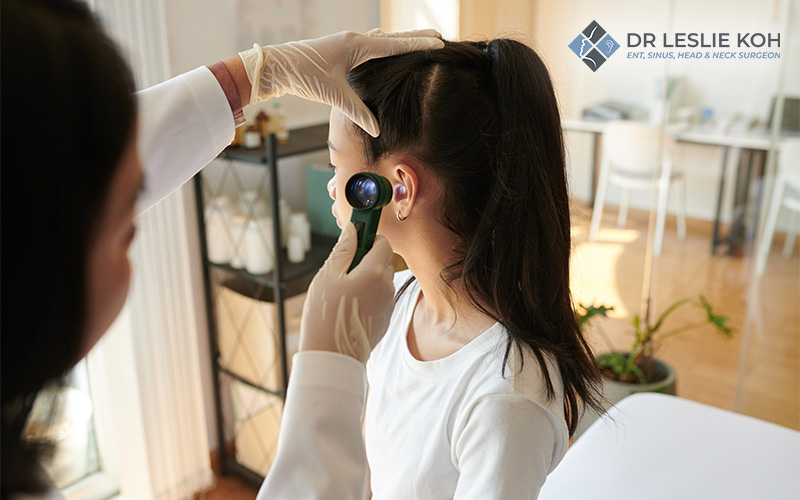
What Causes Hearing Difficulties in Children?
There are several reasons why a child may have trouble hearing clearly. Some causes are temporary and treatable, while others may require ongoing support:
- Ear infections are common and can lead to fluid buildup that reduces sound clarity.
- Excess ear wax may block the ear canal and interfere with hearing.
- Congenital conditions, including genetic factors, can result in hearing loss from birth.
- Acquired causes, such as exposure to loud noise, untreated infections, or head injuries, can affect hearing at any stage of life.
In Singapore’s humid climate, earwax buildup is a frequent concern. In such cases, professional ear cleaning by a trained provider can help resolve temporary blockages and restore sound clarity.
Why This Matters: Not all hearing problems in children are permanent. Identifying and managing reversible causes early may reduce the risk of long-term impact on learning and development.
How Does Hearing Loss Affect Speech and Learning?
Hearing is essential for language development. From infancy, children begin learning to speak by listening to the sounds around them. If a child cannot hear speech clearly, they may struggle to develop accurate pronunciation or understand what is being said. Over time, this can influence their confidence, social interaction, and participation in the classroom.
Even mild or intermittent hearing loss can interfere with phonics and vocabulary acquisition. Research indicates that early intervention, ideally before six months of age, is associated with consistent speech and language development in children with hearing problems.
Pro Tip: If your child is receiving speech therapy but has made limited progress, a review by a pediatric ear doctor may help determine whether hearing is a contributing factor.
When Should You Get Your Child’s Hearing Checked?
If you notice signs of possible hearing issues, it is advisable not to delay assessment. A consultation with a pediatric ear, nose, and throat specialist can help determine whether further evaluation is needed. Hearing tests are designed to suit the child’s developmental stage:
- Babies may undergo visual reinforcement audiometry, which observes head-turn responses to sound
- Toddlers often participate in play-based assessments that make the process more engaging
- Older children can complete structured tests similar to those used for adults
These evaluations are non-invasive and can be carried out in a children’s ENT clinic setting. Even if the issue turns out to be temporary or mild, early identification helps guide appropriate steps for supporting speech, learning, and day-to-day communication.
Why This Matters: Routine school screenings may not detect all types of hearing difficulties. Specialist assessments offer a more detailed insight, particularly in cases where symptoms are subtle or fluctuate over time.

Conclusion
Hearing problems in children are more common than many might expect. Since children may not realise they are experiencing hearing difficulties, the signs can go unnoticed unless adults are actively looking for them. Whether the cause is temporary or ongoing, early identification supports clearer communication, learning, and social development.
Dr Leslie Koh provides age-appropriate evaluations to help identify and address childhood hearing concerns. If you suspect your child may not be hearing clearly, a consultation can help provide the answers you need.
Take the first step towards supporting your child’s hearing and development. Book an appointment today.